
Blooming Bougainvillea in two styles
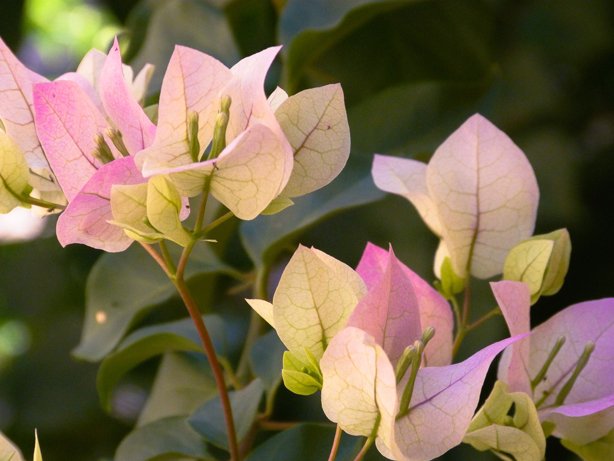
A while back I tried out a Panasonic Lumix DMC-FZ40 for the first time. An Imperial Thai Delight bougainvillea was beautifully blooming in my friend’s backyard. This breed of bougainvillea blooms with tiny white flowers surrounded by leaves that turn a charming gradient of pink and white, and I thought it would make a fun subject to photograph.
Looking though the camera, I found myself seeing the colour as the main subject rather than the bougainvillea itself. The plant was a canvas with vibrant veridians, creamy pale greens, white, and pinks against a backdrop of a cloudless bright blue sky.
This impromptu photo session had me snapping pics in the midday sun. Midday sunlight can be challenging to work with sometimes. However, you can get some interesting high contrast effects with the deep shadows and bright highlights. In the case with these flowering clusters, the sunlight passing through the semi-opaque petals made them seem to glow against the non-transparent dark green leaves.
Taking the photos into Lightroom for processing, I found the image quality to be about average for a camera of its time. Uncropped the images were okay, however, when cropped there was significant noise present. Rather than fighting it, I used the noise to my artistic advantage. The pink, white, and blue colours were already giving Y2K vibes, so I leaned into that with my editing choices.
I find a slight blur within an image can invoke feelings of nostalgia. To replicate that I reduced the clarity a bit and subtracted the dehaze a small amount. Lowering the dehaze adds a soft glowiness to the highlights that goes along with the Y2K aesthetic. To recover the noise lost by lowering the clarity and dehaze, I increased the contrast a bit. Like film grain in an old photo, I feel that noise can help give the cozy feeling of “old times”.
Colour grading was kept to a minimum. I used toning to subtly enhance what was already present. I slightly shifted the white balance temperature to be a tad warmer than shot – another way to add feelings of nostalgia. Typically, shadows are cooler in colour, but for these images I added a small amount of yellowish green into them with an equally small amount of blue violet added into the highlights. The result is an image that allows the original colours to tell a story of a time not so long ago, but not yesterday either.



Originally, I intended to process all the photos in colour. However, the images with the bougainvillea against the sky contained a large amount of noticeable chromatic aberration. I didn’t find noise in these photos to be charming either. After several unsuccessful attempt to work with the issues and even remove them all together, I decided to go with a monochromatic approach. The results were very striking thanks to the high contrast between the white petals against a darkened sky. The images still contain noise, but the monochromatic approach helps hide the problems well. I think these photos give off a very different vibe from the previous set of hazy colour fronted Y2K blooms. Rather than colour being the subject, now the plant itself takes center stage in these noir coded photos.
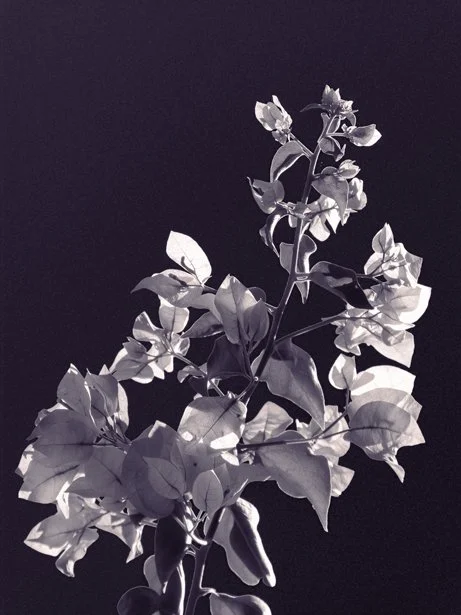
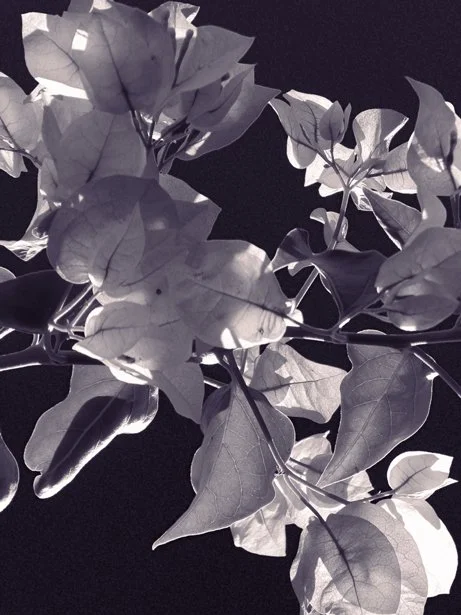
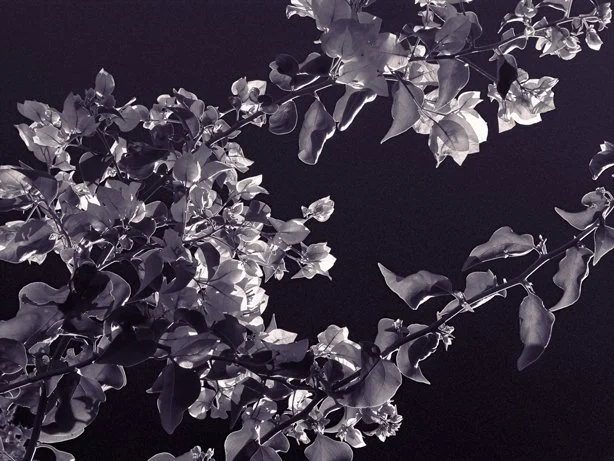
I love how these two versions exemplify how powerful editing can be for altering and creating a mood or a theme for a set of photographs that was not inherently present from the start.
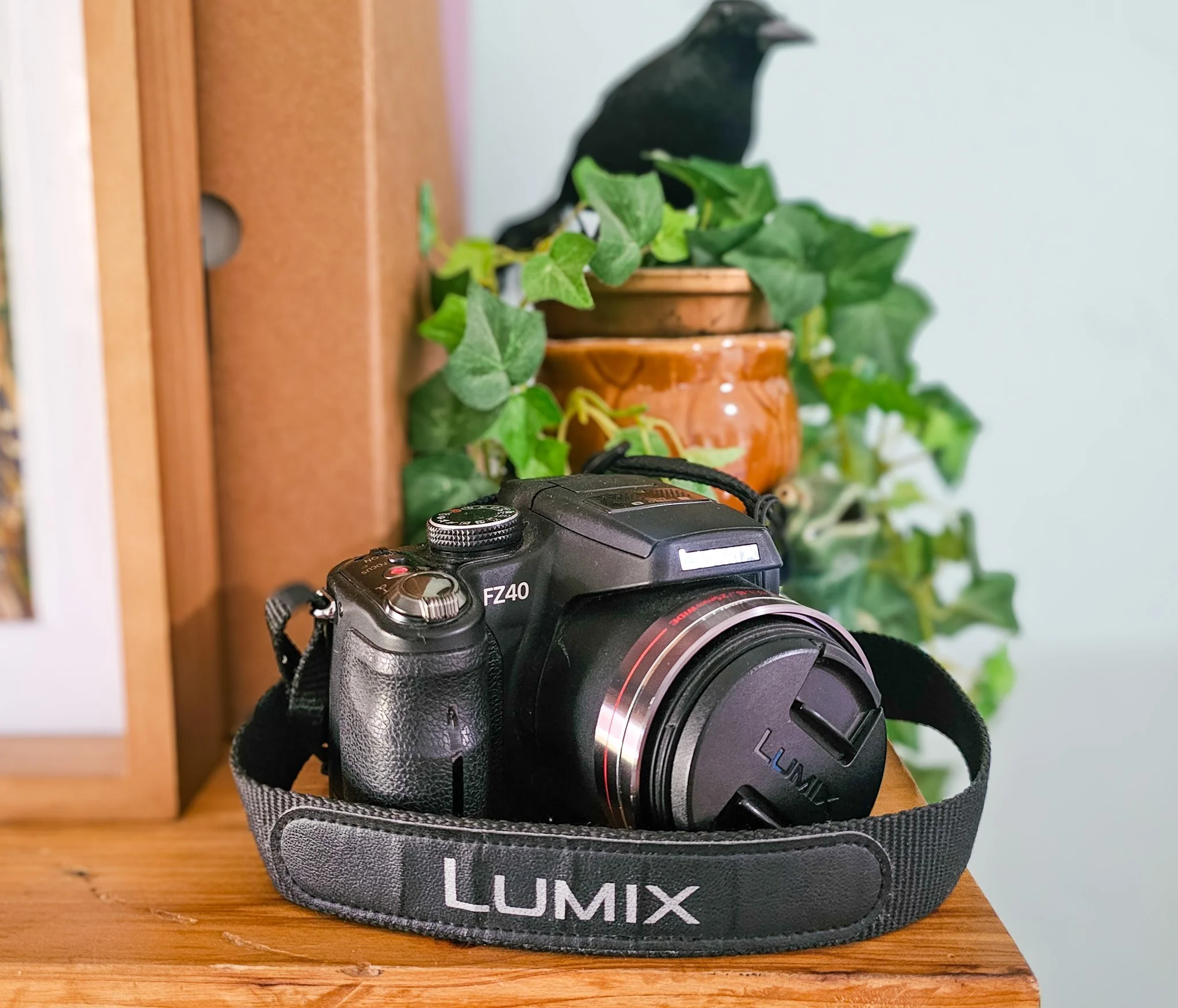
The Panasonic Lumix DMC-FZ40
Retro Review
When it was originally released in 2010 the Panasonic Lumix DMC-FZ40 retailed for $400! Thanks to tech depreciation, my mom was able to pick it up at a yard sale for a more palatable $20. Spec wise, it comes with a 25-600mm fixed lens (24x optical zoom), an 80-1600 ISO range, a 1/2.33 CCD sensor, and a rechargeable bloc-battery.
First impressions of it were positive. Even though it is bulkier than a pocket point-and-shoot, I still found it to be lightweight. Additionally, the built in grip made handling the camera with one hand easy and comfortable. Even as I was sitting in the dirt and bending back to get interesting angles, the camera was easy to handle. I mostly utilized the back LCD screen for composing shots, but I appreciated having the option of a digital viewfinder to look through as well.
I very was surprised to find that in addition to the standard auto, shutter, and aperture priority modes, it can also shoot fully manual! The ability to shoot manual places between cheaper point-and-shoots and higher-end DSLRs. I gave both manual and automatic settings a try and had no issues with either one. The button and dial placements made shooting in manual comfortable and intuitive. Auto mode worked as it should, allowing me to trust its technical decisions as I focused on composition.
Image quality was the only real downside I found with the FZ40. Given the small size of the image sensor, it shouldn’t have been too much of a surprise. All my shots were in bright daylight, so I expect the FZ40 to underperform in low light even more. At today’s price point of $20, I don’t think it’s a big deal. Had I bought this brand-new back in the day for the original price of $400, I would have been rather unhappy. Going forward I will have to be more mindful of those limitations and thoughtful of in camera composition and cropping. Even uncropped, I don’t believe the image quality is sufficient for printed work, but I think these are absolutely adequate for personal snaps and social media sharing.
The negative aside, I still loved the images I was able to pull from this photo session. Working though the processing and deciding the direction of editing was a fun challenge too. Overall, I enjoyed shooting with the camera. I can totally see it becoming a go-to camera for day trips. I love that it allows me to freely choose between auto and manual while still being compact enough to not be cumbersome.